Streaming Counts -The Music Mental Health Pandemic
Should streaming counts be hidden for the mental health of artists?
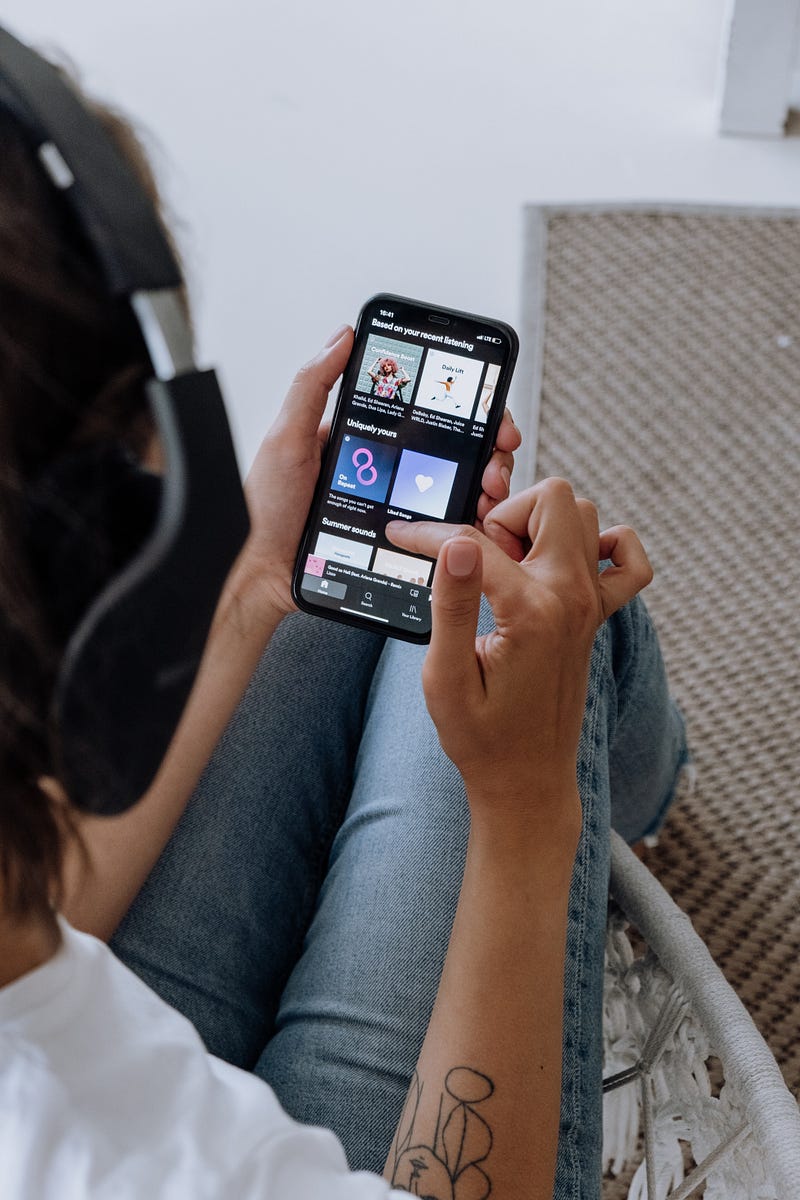
Earlier this year I posted an Instagram story about an artist who approached me with 642,983 cumulative streams of their top 5 releases on Spotify over the last year. I am writing this blog post as I received over 100 DMs about this subject, clearly hitting a nerve.
This particular artist in discussion quite literally could not sing, and their songs were entirely unlistenable. Their message to me was, “I’m not ready to give up on my career just yet”. They weren’t seeing or feeling a connection to fans despite their streaming numbers indicating advanced listenership. Perhaps they had been taken advantage of by someone promising them streams, or, deep down they may know that these streaming counts are not real. Willful ignorance, choosing to look the other way.
For some, having inauthentic data validation of their work to gain significance and social currency amongst their peers is a price worth paying. For some, it’s more comfortable to believe that fake listeners are real fans than it is to accept they simply are not yet skilled, or credible enough at what they do to warrant wide listener attention. The pressure artists face to compete with their peers is absolutely crushing. Imagine every small business in the world having their monthly P&L available for every customer to see, and feeling social pressure to post about their year-end business health and accomplishments, or failures, for all to see. This is what it’s like for artists, and as I hear from SO many of you, it is nothing short of wildly toxic. (see Spotify Wrapped — a year-in-review playlist and slideshow)
The comparing and self-worth valuation based on streaming counts is it’s own pandemic.
A lot of attention gets paid to how social media platforms, in general, can severely impact your mental health for the worse (understatement of the decade). Streaming counts and the platforms responsible for highlighting them (looking at you Spotify), rarely if ever get lumped into those conversations publicly, and this metric is the one that artists are most severely judged by. Judged by their peers, by the industry, sometimes by listeners, and most significantly by themselves.
Ironically, Spotify revealed that streams of mental health playlists doubled in 2020. With categories like “calm,” “mindfulness,” and “self-care”, hell, mental health is even considered a GENRE now!
I think at this point in the maturity of social media, most artists like you have (thankfully) started to move past evaluating your self-worth in relation to your follower count. You have seen behind the curtain, and you know all the paid growth solutions out there and are hyper-aware of bots. Your new tool of measurement of self-worth lies overwhelmingly in the hands of Spotify. Now you can watch your worth as an artist unfold moment to moment.
Oh, look! 3 people are listening right now!
Watching your streaming count rise creates the same dopamine hit often discussed in relation to seeing engagements rise on social platforms. Dopamine, a neurotransmitter, can make you feel happy and a even little high. This high can be particularly triggered by comparative behavior, where you compare your data to others who are similar to you.
Not only are you the creator of your music, but you are now also the consumer of it in real-time. Happy happy, joy joy.
Who is better off?
Artist A — who has 5,700 followers (mostly real people) on social media, who has 3,800 listens of their new single, and can play a show and have 75 to 100 people show up.
OR, Artist B — who has 78,000 followers on social media (mostly bots), 200 to 400k listeners of their new single (mostly AI bot “listening”), and if they play a show — maybe 5 people will show up?
The answer is obvious. But, who “looks better” on the surface? Psychologically, people are more likely to engage with a person who has higher levels of engagement. As a consumer, one might feel that because an artist has a large listenership, they are more credible. It may, in fact, influence how that consumer listens and hears the music. These metric data points can truly play into one’s perception of what one sees and hears. A study published in Child Development in 2018 found that college students were more likely to like Instagram posts that had already received many likes from thousands of followers. Don’t you think this is also potentially true for streaming? As the artist, seeing another artist with significantly more monthly listeners may make you view them as more popular, or worse, more worthy than you.
Which artist, A or B, do you think feels bad about themselves and like they aren’t doing enough, or can’t break through to the next level?
The answer is both.
Artist A is chasing the perception of Artist B. Artist B is chasing the organic engagement of Artist A. Artist A knows Artist B’s numbers are inflated but still feels insecure about it. Artist B is complicit in their inflated metric status but chooses to look the other way or perhaps believe it's real. Artist A’s numbers don’t impress industry suits who tell them to “get your numbers up” (which really means, “we're not interested”). Artist B’s numbers don’t fool anyone in the industry and are actually a bad look (they also get told to “get their numbers up” when someone is not interested). Artist A thinks if they get their numbers up to Artist B’s level, labels will come knocking -they won't. Artist B wonders why no labels are coming knocking, especially when they find out about an artist with 500 followers, or no followers at all, that gets signed.
Lets just say that Artist B’s streaming counts were actually real, chances are they would still feel unfulfilled and have anxiety surrounding increasing those counts, maintaining them, or comparing them to artists with more.
Another result of this toxic comparing of streaming numbers is that it can result in some artists reworking their projects in the hope of getting better performance by writing music for the algorithms. Literally reworking their art, away from their creative instincts, to what they think more people will stream or what algorithms will deem worthy to propagate. And don’t forget that you need to hit certain metric milestones to unlock features that support your growth. For example; to create Spotify Marquees in Spotify for Artists, artists need more than 15,000 U.S. streams over the past 28 days or more than 2,500 U.S. followers. The carrot and the stick.
Ok, take a deep breath, that was a lot. Let’s balance this out a little bit as I want to be careful not to paint streaming & social platforms as the enemy, I think thats a cheap out, and an easy way to deflect personal responsibility. You can use and view the platforms you put time and energy into however you choose. And perhaps thats the most important word to remember here, choose. You get to choose what your streaming performance means. You get to choose whether or not you want to get caught up in the chase. Using low streaming performance as an excuse to justify inaction or not going all-in, that’s also your choice.
Platforms create an illusion. An illusion that you are being left behind, missing out. An illusion that you must relentlessly chase attention, build a following, convert them to fans one-by-one, engage with them on multiple platforms all at once, all day, every day.
Take a moment (A day, a week, a month) and step out of the current so you can clearly see what is happening. Watch it keep flowing along with or without you. That river is never going to slow, and you must resist the temptation to jump into it’s rushing waters or get left behind. I’m reminded of a favorite lyric from Bon Iver:
“What a river don’t know is, to climb out and heed a line. To slow among roses, or stay behind.”
Consider that there is nothing to chase, nothing to keep up with. Consider what in your gut feels unhealthy in every way, is in fact just that. Consider that your core fans, your REAL listeners, are not going anywhere. Do not lose sight, ever, of the fact that the biggest artists in the world have been working for an incredibly long time on their craft. Their overnight success was anything but. They feel lost and confused like you. They experience the same trying to keep up feeling you do!
It’s one thing to see and be able to gauge the performance of your music as a valuable learning tool, I’m all for that. It’s another thing entirely to have your performance and listener development available for everyone to see and for you to feel judged by.
If all your streaming data was private, you might still be unhappy with a song’s performance, but it would likely serve as a motivating factor if you and your team could view it without the spectre of public judgement. You could still leverage strong performance in your conversations with those interested in such numbers. Perhaps Spotify for Artists could create a private link for artists to share their data and performance with bookers, labels, and others the data might influence. For those who have strong, authentic streaming data, this is a tricky subject and I truly understand the dilemma.
Should Spotify hide streaming counts (Apple does albeit for different reasons)? I think it certainly warrants a conversation for the mental health of musicians, and it gets my vote.
If this resonated with you, please share it with other artists who might find it valuable.
