Artists and the Uncanny Valley
What Really Keeps You From Becoming the Artist You Know You Can Be And What To Do About It.
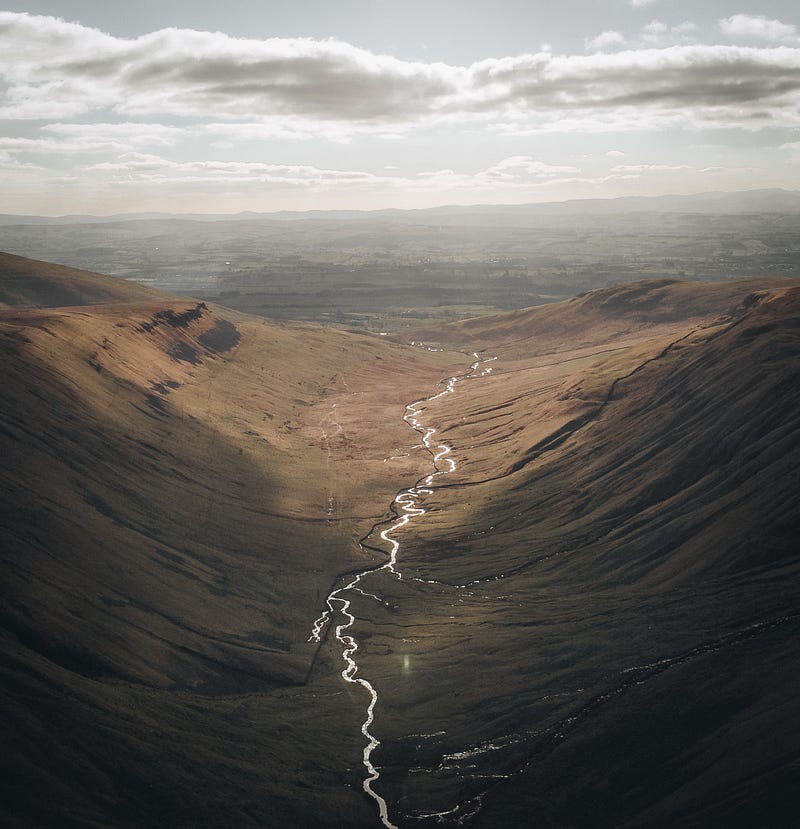
This blog post came to me one day while taking a quick hike at Storm King Mountain, a short, rugged, bang-for-your-buck of a hike an hour and a half north of New York City. I had been thinking about something one of my Berklee Online students had noticed as she worked through mirroring & keyword mapping exercises as part of a course I teach.
She had made the observation and connection that with the artists and brands that she admires and consumes, it is their aspirational qualities that she most often sees herself in.
The Mirror Principle
As music creatives, you see yourselves reflected in the artists you love and consume, like a mirror. More specifically, when an artist, and their brand, is clearly defined and articulated, and if what you see is a reflection of yourself and your values, then you will look deeper, consume, follow, and start to desire what they have, and how they are being.
There are three reflection points you see in an artist that you admire:
Who you feel you are in this moment:
“That’s me!!”
2. Your inspirational self:
“I’m going to be like that!” or “I can be like that!”
3. Your aspirational self:
“I hope to be like that one day” or “I want to be like that”
The words inspiration and aspiration are often interchangeable in how they are used, but they are subtly different.
Inspiration is “the process of being mentally stimulated to do, feel, or be something, especially to do something creative.”
Aspiration is “a hope or ambition of achieving something.”
Inspiration is something external that we seek out to call us into action.
Aspiration is something internal that we cultivate over time.
The Aspirational Trap
As artists, you all have other artists that you admire and desire what they have, in a positive way. Usually these artists are legacy acts or those who are at the top of the game.
From my work in mentoring and coaching, I can see that so many artists live almost exclusively in an aspirational state as a way of being when they look at others that they are trying to model.
“Models are people who show us what is worth wanting.
Rather than an internal (biological) homing device that helps us make choices, models are external signposts that steer us toward the pursuit of certain people, places, things, even lifestyles.
Models are like people who seem farther up ahead on the path we’re on; they can see around a corner that we can’t see around. We assume that they have some insight into which direction to go that we do not. In short, we assume they have something that we do not — that they possess some quality of being that we do not. And so we follow them.
The things themselves don’t matter much when it comes to desire. We care about people (models), not things. They represent some quality of being that we think we lack.” —Luke Burgis (listen to his incredibly insightful episode on the Knowledge Project Podcast.)
Which brings us to robots…
The Uncanny Valley
The uncanny valley is a term used to describe the relationship between the human-like appearance of a robot and the emotional response it evokes. In this phenomenon, people feel a sense of unease or even revulsion in response to humanoid robots that are highly realistic.
The wider the gap, meaning the more robot-like they look, the less uncomfortable we are with them. As robots look more human, we have a positive emotional response to them, but only to a certain point, and once they look too close, too indistinguishable from us, we feel very uneasy and uncomfortable.
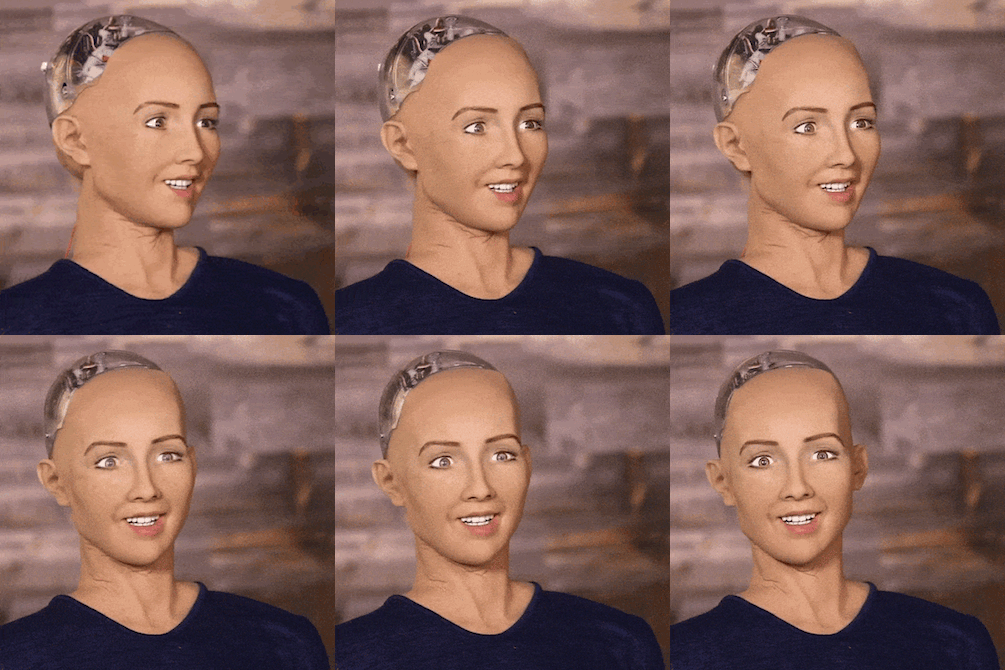
Yeah…No. Just try showing up at my door with an Amazon delivery someday and see what happens.
As artists, the wider the success gap between you and the artists you love, the less threatened you are by them. Their success is at such a scale that it has no resemblance to you and your artist life. Therefore, it’s easy to fall into an aspirational state (a state of “someday…”). That wide valley is an easy one to desire. The path to closing the gap can appear so vast and overwhelming as to not even bother trying to thread that trackless forest. So you stay aspirational. It’s fun to be aspirational, to dream of someday. There is no pressure when you aspire, no vulnerability, no exposure. You also do not share the same desires of the top 1% of artists, a key point.
When other artists you admire, and desire what they have, are too close to resembling you — it can make you incredibly uneasy, or worse. What they have, and how they are being, may actually be attainable if you just put in the work, the focus, and took the action necessary. It’s within reach, which can be terrifying.
There is a vulnerability, and exposure to criticism and judgement in leveling-up to those that are proximal to you.
The artist in her bedroom writing her first batch of songs is not intimidated by Taylor Swift, she is frozen into inaction by her peer who has a growing social media following on TikTok and a few thousand streams on Spotify.
What keeps you from acting and becoming the artist you know you have inside you are the other artists that most closely resemble you that are perceived to be doing more, have more, or “being” more than you. AND, you know that you share the same core desires. This will probably show up for you like shallow envy, resentment, or quietly hoping they will fail.
Like with the Uncanny Valley theory with robots; “it is not difference, but sameness, that terrifies us. No similarity is more dangerous than the similarity of desire.”- Luke Burgis
Great... What do I do then?
1. Know it. Feel it. Move Forward.
If you are not self aware, your career will be mostly reactive and too often led by your feelings and emotions. A career as an artist is one of layered learning. You must learn each layer by physically and emotionally experiencing it before you can move on and see the next layer clearly. You have just learned a new layer of your development, so no more hiding out now that you know the source of any paralysis you may feel.
You know why its so painful to see other artists similar to you doing well? What they have, or how they are being, is activating one of the most painful feelings a human can have, what is considered true pain — the pain of unrealized potential. Ouch.
Feel it without feeling bad about it, that won’t help you. Consider this acknowledgement as simply a part of your training.
Which leads us to the next step>
2. Spend Time in Another State:
Consciously work towards moving from an aspirational state to an inspirational state, a state of being called into action. Action is the only thing that makes anything move. Period. Within how you talk to yourself, replace “I hope to”, “I want to”, “I wish” with “I will” or “I am” — reframe your language to be active rather than passive and then start doing instead of thinking about doing.
One of my favorite all-time quotes is “Either write something worth reading or do something worth writing (about).” — Ben Franklin.”
Read that ten times and then get to it already.
3. Be scared of robots, not of achieving what you desire.
We humans are funny creatures when we finally get what we desire. We say “that’s it?!”, and then we assume we made a navigational error and start to look for the next thing. Do not fear achieving what you desire artistically, and when you achieve it, know that it wasn’t a mistake! Make sure you are orienting to rooted desires, desires that are lasting and anchored in what truly matters to you. Not the vanity metric and superficial desires we are all so vulnerable to.
And, of course, start preparing for the inevitable battle against the robots. I’m ready. Well at least I hope I am…
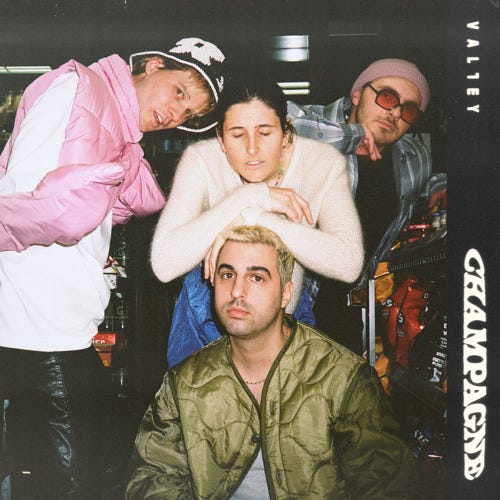
Soundtrack courtesy of “Champagne” by Valley.
If this resonated with you, please share it with other artists who might find it valuable. Check out the rest of my blog posts and get in touch with me here: www.thecompass-method.com
If you want to learn more about mirroring and keyword mapping, I teach a course called Brand Identity Development for Artists, Writers, and Producers as part of Berklee Online’s Masters Program.

Patrick Ermlich is a life-long artist guide, educator at Berklee Online, and CMO of Gramophone Media.
